I have two types of dreams. Some I’ll remember when I wake up but it’s fleeting and they fade fast. Others are incredibly real and I can remember them for years. Dream interpretation is obviously not an exact science, but any time I’ve looked up one of these “the hills are alive with the sound of music” dreams, it always mirrors what’s going on in my life. I had one of these dreams last night.

I’m chosen as one person to get on a spaceship to Jupiter. While on the way, there’s lots of arguing and fighting. Eventually, I get left behind, just free floating in space, and have to scramble back to an abandoned space station before I run out of air. I manage just on time. The station is bright and clean with no windows, but completely empty. And then I woke up. So what does this all mean? Let’s break it down.
Dreaming of a spaceship traveling to Jupiter symbolizes a major journey toward personal growth, ambition, and spiritual expansion. The spaceship represents your drive to explore the unknown, while Jupiter, known as the planet of luck and wisdom, points to upcoming success, prosperity, and a higher understanding of your life’s purpose. HOWEVER, this dream typically reflects a conflict between your desire for personal growth or escape (the spaceship to Jupiter) and the chaotic, draining dynamics in your waking life (the arguments). It suggests you are trying to navigate big life changes, but feel held back by the people around you. (So far so good. Although I don’t feel held back by people but by the limitations my body and my illness imposes on me.)

After being left behind by the ship: This shift in your dream signifies a sudden feeling of rejection, isolation, or missing out on an important life opportunity. Getting left behind by the ship suggests you feel excluded from a major project, a social group, or a path toward growth. The chaotic fighting you saw earlier likely caused you to lose your grip on the situation, leaving you feeling powerless. Floating completely free in open space represents a total loss of structure, grounding, and control in your life. Being entirely untethered in the void of space amplifies your feelings of vulnerability, but also introduces a profound sense of absolute freedom. Space is cold, vast, and silent. This imagery often surfaces when a person feels profoundly isolated, misunderstood, or completely disconnected from society and the people around them. On the positive side, floating free means you are completely detached from the gravity of everyone else’s expectations, arguments, and baggage. You are lighter, unburdened, and entirely on your own terms. (I’m not entirely sure how these two things mesh. Can I feel alone and misunderstood and be lighter and unburdened at the same time?)
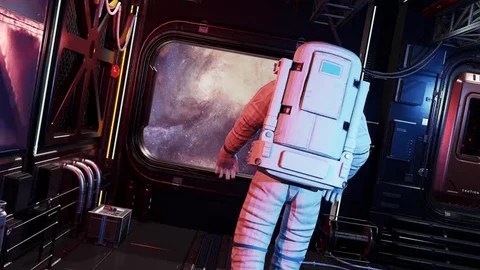
After making it to the station: Making it to the space station just before running out of air represents a narrow escape from total burnout or emotional collapse in your waking life. This dramatic resolution shows that while you are pushing yourself to the absolute limit, your subconscious knows you possess the survival instincts and resilience to save yourself at the final moment. This indicates you may have stayed too long in a toxic situation (the arguing ship) or drifted too long without a plan (floating in space), bringing you dangerously close to a breaking point. Reaching the station wasn’t just a choice, it was a necessity for survival. In your waking life, this mirrors a desperate need to immediately cut out drama, pause your frantic routine, and find a safe space to breathe. (I can relate to this. I often feel severely out of control in my waking life, never knowing what my body will and will not let me do. I sometimes feel like I’m close to breaking, but always seem to stop short of complete collapse. I’ve come very close, too close, but I’ve bounced back.)
In conclusion: You have successfully escaped the toxic crowd on the ship, survived the vulnerable void of space, and found air. However, you are still inside an abandoned station. You have secured your immediate survival and peace of mind, but the long-term question of where you go next remains unanswered. (Yeah, no shit.)
The subconscious always seems to know what’s going on, doesn’t it?
M.